
Alderga and Aldergamouth
Aldergamouth was a harbor:
- located three poles, or a half tide (c. 3 hours?), south of Medeasblik (8a)
- where former sea king Sterik (uncle of sea warriors Tunis and Inka) had taken his retirement (8b)
- at the southern head of which stood the Treasureburg, a stone building where a variety of shells, horns, weapons, and clothes were kept, brought home from distant lands by the steersmen (13i)
Alderga was a lake:
- located a quarter [FJARDÉL] (of a day?) from the Aldergamouth (13i);
- surrounded by richly ornamented barns, houses, and gardens (13i);
- in which an operational fleet was docked, with flags of many colors (13i);
- connected to a narrow mouth (ÉGA.MVDA) into the sea by a dug canal, which flowed past the burg Forana. This canal was the way out for the fleet, and the Flee was the way in (through the Aldergamouth). On both sides of the canal were beautiful houses, brightly colored, with gardens surrounded by evergreen hedges (13i). This canal was blocked by sand and lost due to the big flood of ca. 305 BCE (14a);
- where poor Saxmen came with their wives to search in the soil for golden and other jewelry after the big flood of ca. 305 BCE (14b);
- where some of the Ionians settled, as they believed themselves to have sprung from the folk of the Alderga (14c);
- where the best warships were built of hard oak which never rots (16b);
- which was the final destination of the journeys of both Apollania (13i/16d) and Adel and Ifkia (16d).
- on the shore of which sea king Jon was born (9b);
Fragments
[050/19] THIT STÉT INNA WÁRA.BURCH BY THÉRE ALDE.GÁ.MVDE [20] WRYT. (...) HJU IS THRI PÉLA THAT IS [25] EN HALF TY SÛDWARD FON MÉDÉA.S.BLIK LÉZEN.
The following is inscribed on the Treasureburg at the Aldergamouth: (...) It is located three poles, or a half tide, south of Medeasblik.
[053/15] ANDA ALDER.GÁ.MVDE THÉR RESTE EN ALDE SÉ.KÀNING. STERIK WAS SIN NÔME AND THA HROP VR SINA DÉDA WAS GRÁT. (...) TÜNIS ÀND INKA WÉRON SÉKÀMPAR ÀND JUST NW BI HJARA FÀDERJA ANDA ALDER.GÁ.MVDE T.US.
At the Aldergamouth, a former sea king had taken his retirement. Sterik was his name, and the renown of his deeds was great. (...) Tunis and Inka were sea warriors and, at the time, they were staying in the home of their father’s brother at the Aldergamouth.
[065/20] JON THÀT IS JÉVA. WAS SÉ.KÀNING. BERN TO.T.ALDER.GÁ. TO.T.FLÍ. MÁR UTFÁREN MITH 100 ÀND 27 SKÉPUM.
Jon — meaning: ‘given’ — was a sea king, born at the Alderga, who had sailed out of the Flee Lake with a hundred and twenty-seven ships
[085/20] THA STJURAR FON STAVORA ÀND FON THÀT ALDERGA HÉDON HINI GÉRN TO JONIS TOGEN MEN THA GRÁTE FLÁTE WÉRE VPPEN FÉRE TOCHT ÛT.
The steersmen of Staveren and of the Alderga were eager to confront him, but the great fleet was out on a distant voyage.
[110/15] TO THA LERSTA KÉMON WI TO.T.ALDERGA. BI.T.SUDER HÁVA.HÁVED STÉT THJU WÁRA.BURCH. EN STÉN.HUS. THÉRIN SEND ALLER [20] LÉJA SKULPA. HULKA. WÉPNE ÀND KLATHAR WARAD FON FÉRE LÁNDUM. THRVCH THA STJURAR MITH BROCHT. EN FJARDÉL DÁNA IS.T ALDERGA. EN GRÁTE FLÍT OMBORAD MITH LOTHUM. HUSA ÀND GÁRDUM. [25] ELLA RIKLIK SIARAD. INVPPER FLÍT LÉI.N GRÁTE FLÁTE RÉD. MITH FÔNON FON ALLERLÉJA FARWA. (...) ABEFTA THÉRE FLÍT WAS EN GRÀFT GRÀVEN. [111] TO HLÁPANDE DÁNA ALINGEN THÉRE BURCH FOR.ÁNA ÀND FORTH MITH EN ÉGA. MVDA IN SÉ. TO FÁRA THERE FLÁTE WÉRE THIT THA UTGVNG ÀND ET FLÍ THA IN’GVNG. A BÉDE SÍDA [5] THÉRE GRÀFT SEND SKÉNE HUSA MITH HEL BLIKANDA FARWA MÁLAD. THA GÁRDNE SEND MITH ALTID GRÉNE HÁGUM OMTUNAD.
Finally, we arrived at the Alderga[-mouth]. At the southern head of the harbor stands the Treasureburg, a stone building where a variety of shells, horns, weapons, and clothes are kept, brought home from distant lands by the steersmen. A quarter of a day from there is the Alderga, a great lake surrounded by barns, houses, and gardens — all richly ornamented. In the lake, a great fleet lay ready, with flags of many colors. (...) Behind the lake, a canal had been dug, which flowed past the burg Forana, and further through a narrow mouth into the sea. This was the way out for the fleet, and the Flee was the way in. On both sides of the canal are beautiful houses, brightly colored, with gardens surrounded by evergreen hedges.
[116/30] THI GRÀFT THÉR FON.T ALDERGÁ THWERES TO THET LAND THRVCH HLÁPEN HÉDE. WAS VRSÔNDATH ÀND [117] VRDÉN.
The canal that had run across the land from the Alderga had been blocked by sand and was lost.
14b. Gosa: Settlement of the Black Men
[118/20] THÁ VSA LÁNDA WITHER TO BIGANA WÉR KÉMON THÉR BANDA ERMA SAXMANNA ÀND [25] WIVA NÉI THA WRDUM FON STÁVERE ÀND THAT ALDERGA. VMBE GOLDEN ÀND ÔRA SIARHÉDA TO SÉKANE FONUT THA WASIGE BODEME.
When our lands were passable again, groups of poor Saxmen came with their wives to the regions of Staveren and the Alderga to search for golden and other jewelry in the sodden soil.
[120/01] SVME THÉRA JOHNJAR THÉR MÉNDE THÀT HJA FONT ALDERGA [5] FOLK SPROTEN WÉRE GVNGON THÉR HINNE.
Some of the Ionians who believed themselves to have sprung from the folk of the Alderga went there.
[148/10] HWAND TO STÁVEREN ÀND ALLINGEN THÀT [15] ALDER.GÁ THÉR WRDON THA BESTA WÉR.SKÉPA MAKED. FON HERDE ÉKEN WOD THÉR NIMMERTHE NÉN ROT AN NE KVM.
because at Staveren and along the Alderga the best warships are built of hard oak which never rots.
[157/20] ÉVIN AS A.POL.LÁNJA BISKOJADON HJA ÀFTERNÉI LYDA.S BURCH ÀND ET ALDER.GÁ.
Just like Apollania, they concluded their journey with a visit to Lydasburg and the Alderga.
Interpretations
Ottema translated as 'Alderga' and 'Alde(r)gamude'. He did not speculate about where they may have been located, neither in a foortone, nor in “Geschiedkundige Aantekeningen en Ophelderingen” (1878).
Overwijn translated as 'Alde(r)ga' and 'Aldegamond(e)'. To the fragment of ch. 8a he noted in his 1941 edition (p.53): "Ouddorp (Alderga) near Alkmaar".
Jensma translated as 'Oudegouw' and 'Oudegouwemond' and located both at Enkhuizen. This is remarkable, since fragment 13i states that they were separated by a quarter of an hour (?) [a 'FJARDÉL']. Also, fragment 8a states that Aldergamouth was located three poles, or a half tide (3 hours?) south of Medeasblik, whereas Enkuizen is rather (south-) eastward of Medemblik (assuming the latter is located where once Medeasblik was).
Initially translating FJARDÉL as 'quarter of an hour', at later consideration (25-3-2023) Ott thinks that it will rather have been a quarter of a day or of twenty-four hours. His provisional interpretation is that the Aldergamouth with its Treasureburg must have been located approximately between what are now Hoorn and Wijdenes; that lake Alderga will have been approximately where later the Waerdt (now Heerhugowaard) or the Schermer (or the Wogmeer?) was. The canal from Alderga, along Forana, to the sea will partly correspond to the Pettemer Vaert (also see Hoornse Vaart).
Westfrisian '(Oude) Gouw(e)' toponyms
Soo en moet niemant ladiken (vuil baggeren) in enighe sloten .., uutghenomen die tocht, die oude gou ende andere ghemeene wateren, Wfri. Stadr. 2, 222, 158, Holland, 1520-1530
So moet daer niemant scuitwasen in halighen slooten twischen die (een woord uit?) ende die oude ghou op een pont, 262, 127.
See map Waters with "Gouw" names below.
(add sources)
Maps of the area
-
 Waters with "Gouw" names in reconstructed map of 13th century Westfriesland.
 -
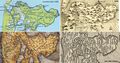 Westfriesland: reconstucted map of 1300 and three 16th century maps.
 -
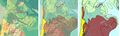 Geological map, map with reconstruction of peat rivers c. 800 CE and combination of the two.
 -
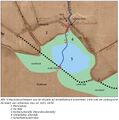 reconstruction of Drecht mouth at Schellinkhout
 -
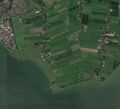 Schellinkhout satellite image


Sources
- "Onstaan, Ontginning en bemaling van West-Friesland" (Arie Bijman, 2019).
- "Een 16 de -eeuwse stolpboerderij op een middeleeuwse terp" (West-Friese Archeologische Rapporten 108, 2017 PDF)